A Chickwheat Seitan Fail | VeganMoFo 2019 Day One

Y’all. Y’ALL. I’m starting VeganMoFo with an epically wonderful fail. It seems appropriate in this new era of raw, unvarnished blogging, right?!

Yesterday evening I decided to get a head start on today’s dinner by preparing some seitan — specifically, the chickwheat shreds from Avocados and Ales. Let it be known that I’ve made seitan plenty of times in the past, using recipes from plenty of different sources. Although I’ve never been able to get it quite as juicy and tender as the kind you buy at the store, it’s always been perfectly fine, and I’ve never had any of the difficulties or spectacular fails I’ve read from other folks who’ve attempted seitan. (Ah, hubris.) So I was excited to try this recipe, which uses a new-to-me method: a long, intense kneading period in a food processor or KitchenAid rather than a few quick kneads by hand. I loved the look of the resulting chicken-style shreds and planned to use them in a quick stir-fry tonight.

Well. I blended up all the wet ingredients before adding the vital wheat gluten. As I stirred it all together, I thought the texture seemed… off. The dough was much softer, smoother and more liquidy than seitans of yore, and I couldn’t detect any of the distinctive gluten strands that tend to form as soon as you add the wheat gluten. But I persevered, dumping the mass into my KitchenAid (fitted with the dough hook) and beginning to knead.

And knead. And knead. And knead.

Rosie is judging me for my seitan fail. I GET IT, ROSIE.

Occasionally I stopped to check the dough, and I began to sense that something was amiss. There were a few stringy strands, sure, but nowhere near the amount I get even when kneading by hand. I’d reached the point where I had to make a decision: Either abandon the project or persevere — knowing that something was dreadfully, fundamentally wrong with my dough and that the results would likely not be as intended. I chose the latter. Maybe it would be edible, if not perfect. This is what I get for my hubris, I thought to myself. I shouldn’t have been so smug about seitan-making!

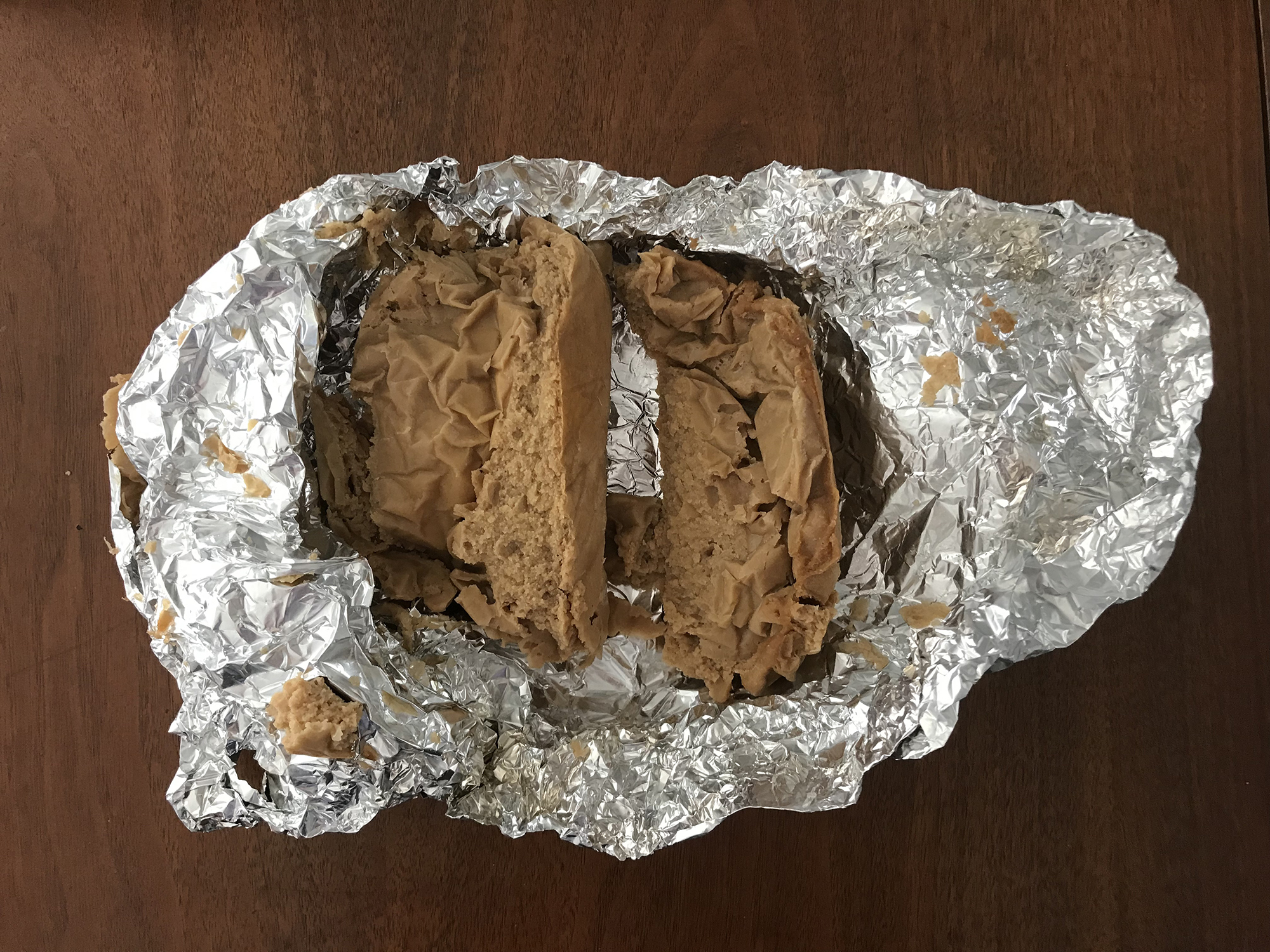
After 20 minutes (the time recommended by commenters who had also used the KitchenAid method!) my poor mixer was hot and my sad dough was… awful. Basically soft, sticky taffy. I dumped it all out onto aluminum foil as recommended and tried to fold it up into a packet, only to look on in absolute horror as the taffy-seitan oozed right out of the crevices. Panicking, I tried lifting it up to rearrange it on the foil. My hands sunk deep into the ooze and the foil ripped, a big glob of dough (batter?!) still attached.

Eventually I managed to wrangle about half the dough onto a new piece of foil, which I quickly wrapped up and dropped into my steamer. (The recipe calls for an InstantPot, but commenters say it works fine in a stovetop steamer too.) By now I knew the texture was wrong, but perhaps it would become something edible in the steamer.

It did not.

Two hours later (well past my bedtime) I removed the swollen foil packet and set it to cool for a few minutes. When I cautiously peeled back the foil and poked at the blob within, I realized it hadn’t improved with steaming. It was soft and squishy and could absolutely, positively not withstand the post-steam shredding that makes the chickwheat recipe so tantalizing.

As I brushed my teeth and got ready for bed, I had a sudden and horrible thought. I ran to the pantry and checked the flour shelf. Here’s what I saw.

A very obviously labeled bag of chickpea flour next to a canister of another flour.

On the left is a glass canister of white whole wheat flour. On the left is a bag — a very clearly, very obviously labeled bag — of vital wheat gluten.

Guess which one I used.

Sigh.

IN MY DEFENSE, I used to keep my vital wheat gluten in that jar, and Steven was the one who repurposed it for the white whole wheat flour a few weeks ago, so I didn’t have a tactile memory of putting flour in the jar. In my mind, it was still wheat gluten. Also, when I made the chickwheat, I measured the flour/wheat gluten by weight, so I just poured it in — I didn’t really look too closely at the consistency of the flour I used, or I would have noticed it didn’t have the very specific, silky texture of vital wheat gluten.

Frankly, I’m shocked it even remotely resembled seitan. There were definitely some strings forming when I kneaded it, likely because whole wheat flour has a slightly higher protein content than all-purpose flour. (And yes, I know one can make vital wheat gluten from flour.) I don’t know what I’ll do with the monstrosity, but I might try to flatten and fry it up into some kind of patty? Or dice it and fry it? We’ll see. Mostly I’m mad I used so much electricity kneading and steaming the dough, but hey, we have solar panels so at least I don’t have to be too guilty.

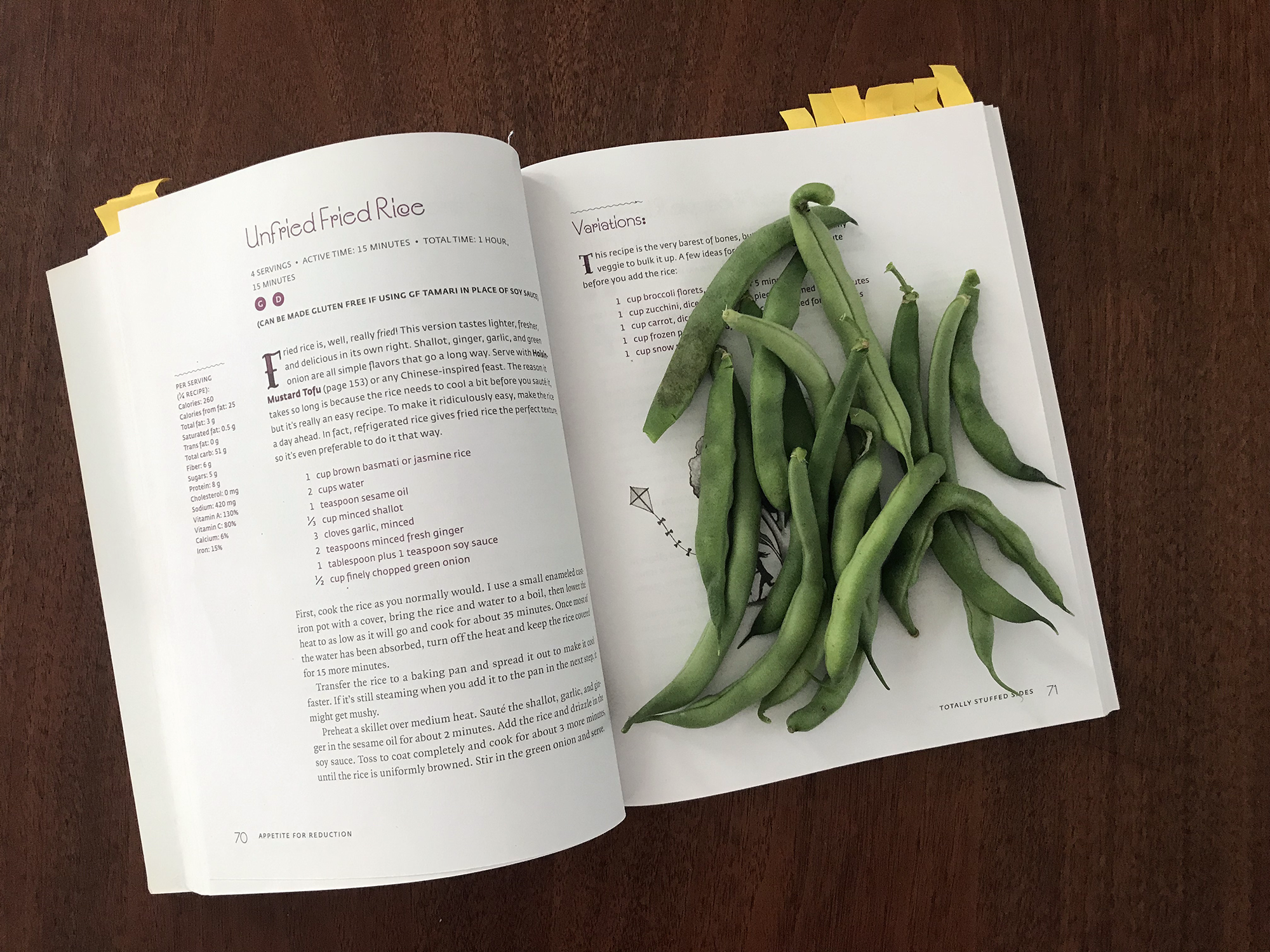
As for dinner, I made a quick fried rice, loosely following the method in Appetite for Reduction. I used green beans and garlic from my garden (woo!) along with a bell pepper from the farmers market and a shallot from the… grocery store. (I also used ginger paste, which it such a lifesaver when you don’t have fresh ginger!) It was good. It would’ve been better with some chickwheat shreds. Next time.

And with this illustrious beginning to MoFo, I’m off to the gym, a new habit for me. I lift weights! I have defined muscles! I wish I had the added protein from chickwheat shreds coursing through my veins so I could get even more ripped! NEXT TIME.

P.S. I see that today’s MoFo prompt asks participants to introduce themselves. You can check out my bio here — it’s still accurate!

P.P.S. In retrospect I know I should’ve taken more photos of my chickwheat process, but hey… I expected it to come out perfectly and I didn’t realize I’d need to document my failure. Oh well.

VeganMoFo 2019: Something New (Actually Something Old)

I went vegan in October 2009 and kicked off my big lifestyle change here on this bloggo by participating in VeganMoFo — the Vegan Month of Food. Since then, I’ve participated in every. single. MoFo. by posting every. single. day.

That’s 10 years of MoFos. That’s a lot of MoFo. That’s a lot of vegan food.

But truthfully, I haven’t enjoyed MoFo that much during the past few years. Instead of feeling like a joy, a chance to rekindle my old love of blogging and enthusing about vegan food, it’s felt more like a chore, something to tolerate rather than embrace. But I hate breaking a streak, so I slogged through. I found ways to make it easier and more manageable and often, yes, enjoyable. But when I saw that VeganMoFo this year was scheduled to begin in August, I felt… dread. Not excitement, but apprehension. Bad news.

Me when I thought about VeganMoFo 2019.

Because summer is sacred to me. I run cold, so the rest of the year I spend waiting for those 90˚ degree day when I lounge outside and not shiver. (Extremely air conditioned office spaces fill me with a near-murderous rage.) I want to read lots of books and daydream about traveling and go to the pool and putter in my garden and watch my pups frolic. I do not, repeat do not, want to obsess over putting up blog posts and photographing food perfectly and following prompts.

So I started making peace with the idea of not participating in MoFo. You had a good run, I told myself. 10 years! That’s a whole lotta posting!

But. Then I had a thought.

What has become Not Fun about blogging to me lately is the pressure to produce Content That People Want. Posts I can pin on Instagram. Posts with (moderately) well-composed photos and lots of SEO terms thrown in. It’s not that I want my blog to become a business, but I’ve always thought, why not monetize it and make a little bit of money off something I’m doing for fun?

But it’s not really fun anymore, and I have a very sparse posting schedule to show for it (outside of MoFo, of course). I genuinely enjoy writing what I do write, but you know what I miss? The old days of blogging. The 2009 era, when I talked a little bit about my day and a little bit about what I ate. Diary-style, casual conversation. Back then, I followed a bunch of bloggers and we commented on each other’s posts on a near-daily basis. It was a fun little community. I could’ve told you their dogs’ names and where they lived; their favorite Isa Chandra cookbook and probably their PPK username (I lurked and rarely posted, but I followed along!).

I frequently reminisce about how much I miss those old days of blogging. I love reading through my old blog posts because they remind me of my life back in 2009, 2010, 2011. There are details I’d lose if I hadn’t written them down, like how unnecessary/fun/ridiculous it was to take my own photos for Christmas cards multiple years in a row. (I can be very extra.) Like how stressful my previous job could be. Like the joy in trying a new vegan product back in the days before every single company out there was producing plant-based items.  (I ate Rice Dream ice cream, for god’s sake!) Don’t get me wrong; I love the ubiquity of vegan products these days! It just used to be more exciting when new ones hit the shelves. I miss that casual approach to blogging.

You can probably see where this is heading.

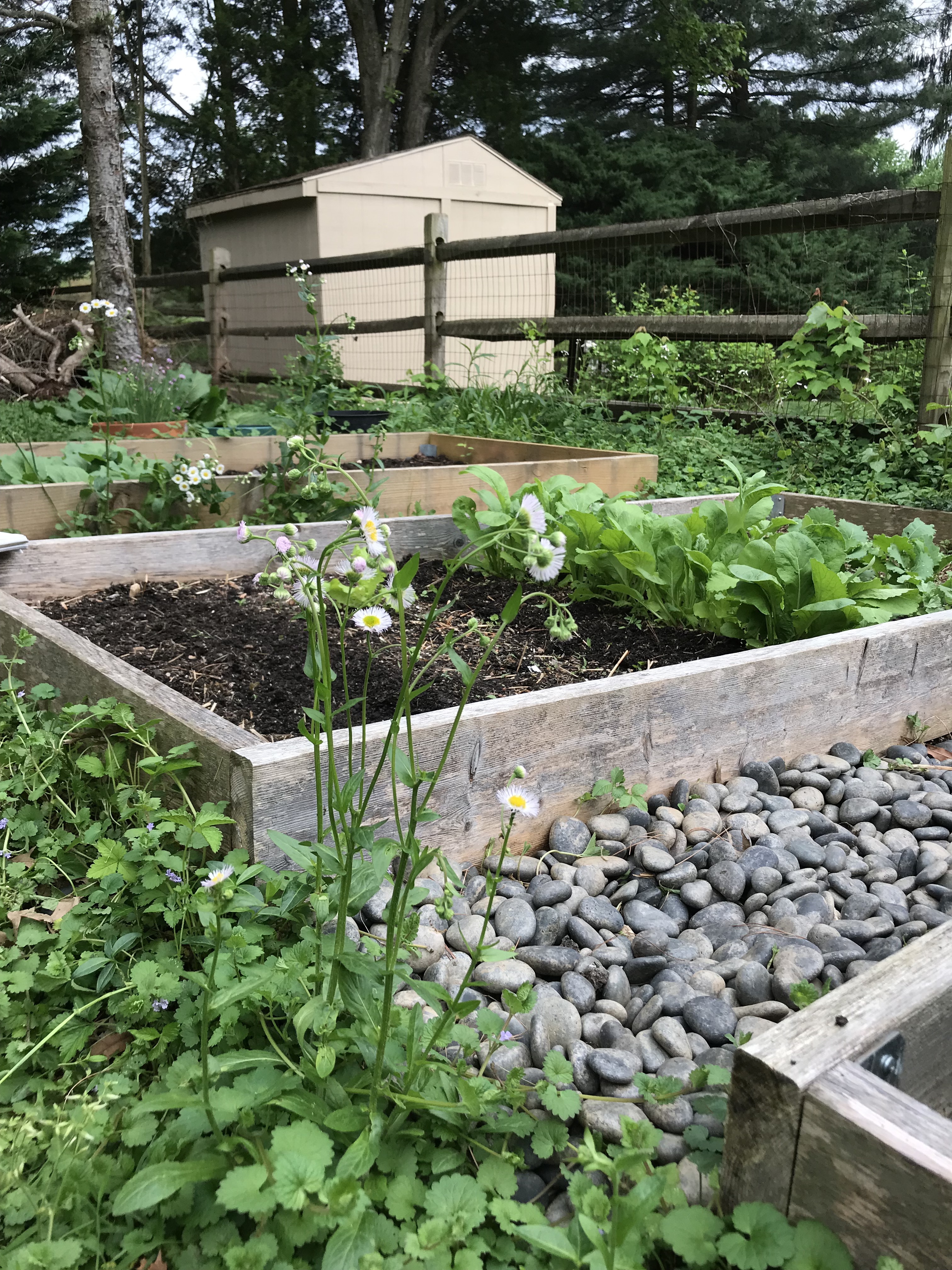
Said garden, earlier in the year. It is now fully wild and unruly.

For VeganMoFo 2019, I’m going back to basics, baby. Back to simple, diary-style, here’s-what-I-did-and-ate posts. It’s gonna be a big middle finger to monetizing and SEO and page rankings, but ohhhh well. It’s gonna be fun. There will probably be lots of photos of my garden, and my dogs, and my favorite summertime beers. But there will also be original recipes and reviews, because I do enjoy creating those… only not when I’m forced to do so!

(And if you’re not into old-school blogging and prefer recipes without personality and content that serves a single, utilitarian purpose, I get it. I hear those Twitter hot takes:  “But why do food blogs have three paragraphs of personal details before you get to the actual recipe?! Just give me the recipe; I’m trying to make dinner, not read your autobiography!” My default response is something about SEO and needing to include searchable terms so you can actually FIND that recipe in the first place. But. What about including personal information and a little bit about your day just because… it’s nice and interesting and fun to read about other people’s lives? And maybe you just want to share? What’s so wrong with that?)

So, that’s what to expect. I’m actually excited about VeganMoFo this year. And I haven’t been able to say that in a while. So here’s to 2019, and a more casual, relaxed, old-school blog.

Greener Habits: 7 Tips for Avoiding Food Waste | How Not to Waste Food

Greener Habits from govegga.com

This post is the first in a recurring series I’m calling Greener Habits, where I’ll share tips and recommendations for cultivating a more earth-friendly lifestyle. Let me know what you’d like to see in this space! 

Whether you’re doing it to save money or to reduce your household’s garbage as you move toward a low-waste lifestyle, using up every scrap of food you buy (or grow!) is a great goal. According to NRDC, 40% of the food in the United States goes to waste.  FORTY PERCENT. Nearly half! It’s both a waste (of food and money) and a terrible irony, given the fact that many Americans don’t have access to healthy, fresh food in the first place.

In my quest to cut down on waste, I’ve cultivated some strategies for reducing food waste. Am I perfect? No. Am I getting better? Yes! In the past year especially, I’ve gotten much better at managing what’s in the fridge and not leaving scraps to languish until they become an unrecognizable puddle of green. Here’s how to avoid food waste in seven tips.

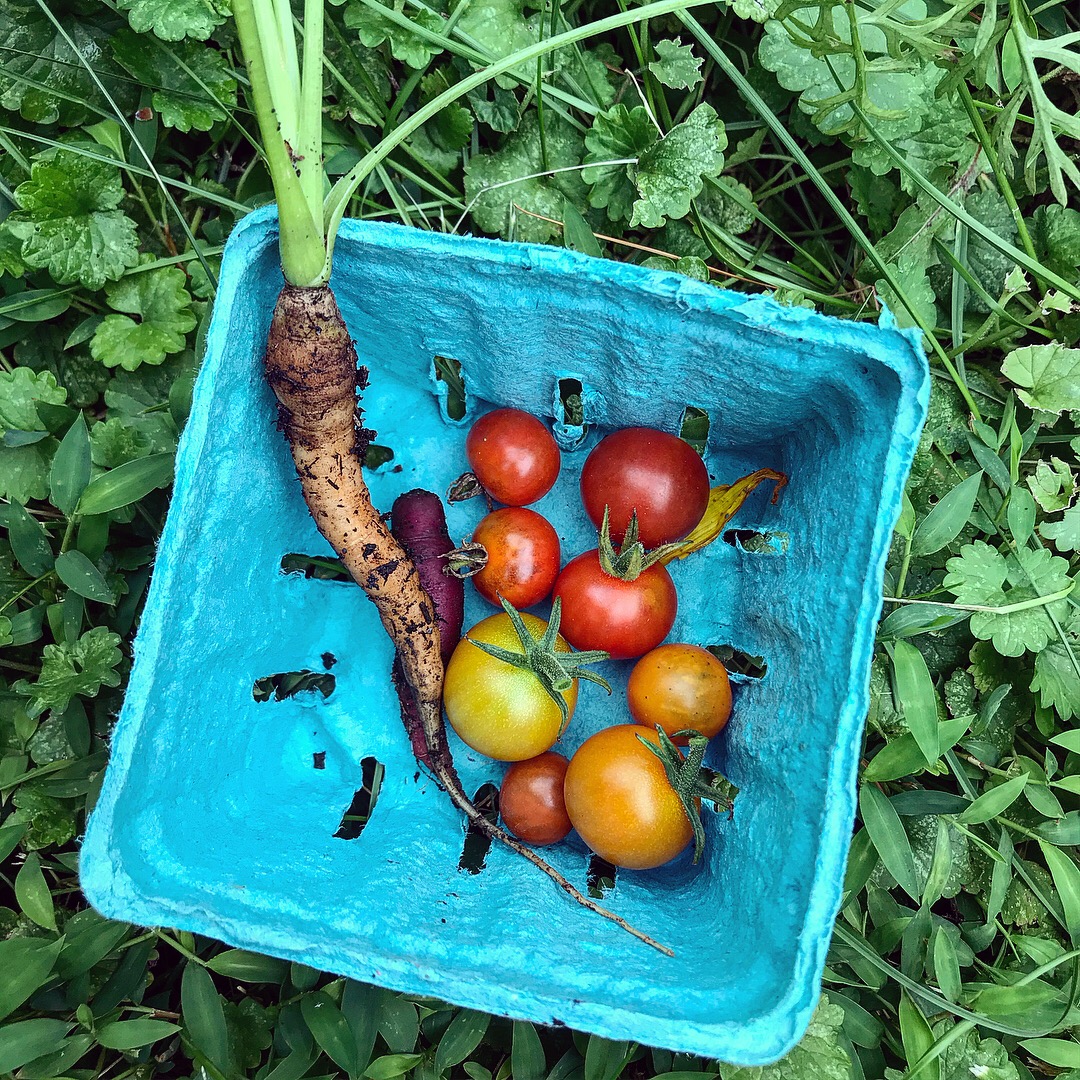
Cherry tomatoes from the garden in a blue basket

Learn to love your freezer.

This tip informs many of the following recommendations! As soon as you see your produce wilting or your herbs getting a little yellow, put ’em in the freezer. If you think, “Oh, maybe I’ll use it tomorrow,” ignore your procrastinating self and put it in the freezer. Don’t worry too much about how it’s packaged or wrapped up. Yes, there are plenty of best practices for freezing produce, but honestly? If you know yourself and know that you’re too lazy to properly blanch that windfall of cherry tomatoes from your garden before throwing ‘em in the freezer, just put them in raw. They’ll be fine for use in a soup or stew or other cooked dish later on. Using less-than-optimal freezing practices is still better than letting the freezable ingredients go to waste! (As long as food safety isn’t compromised.)

Use scraps in smoothies.

A while back, we had some long-forgotten spinach that was on the verge of going slimy, so Steven quickly blanched it and threw it in the freezer. Fast forward a couple months, when I was craving veggies. I grabbed that spinach out of the freezer and whizzed it up with a banana and some almond milk for an old-school green smoothie. Super easy, and I could’ve easily done the same with any non-frozen greens I wanted to use up. You can throw all sorts of odds and ends into a smoothie, frozen or not. Experiment with different fruits and veggies — you’d be surprised what you can get away with adding!

Make quick jams or simple syrups.

Berries. One day they’re perfectly ripe and juicy and basically summer concentrated in a brightly colored tiny orb… and the next day they’re squishy and smelling a little overripe (anathema to those of us who get queasy when anything smells remotely off). The solution? Well, you could certainly freeze them for later use, but you could ALSO whip ‘em up into a quick jam. (Find a quick jam recipe here and one with chia seeds here.)

Don’t have enough berries to make jam? I’ve used up small amounts of less-than-luscious berries by turning them into a simple syrup. It’s dead simple: Boil the berries with water and a little sugar until the liquid reduces, then strain the concoction. Use the syrup in a cocktail, mixed into sparkling water, or drizzled on oatmeal or ice cream. (Adjust sugar to your preferences, and feel free to add vanilla or other spices.)

Follow food storage best practices.

This isn’t as exciting as some of the other tactics, but it’s important! Avoid getting to the point where your produce is wilty or overripe by following these tips from the EPA. Storing herbs in water has been a game-changer for me; when I buy a big bunch of cilantro from the Asian market, I can keep it fresh for weeks by standing it upright in a jar of water.

Rosie and Moria, yawning into the abyss

Share scraps with your companion animals.

Depending on your pup’s (or kitty’s, or rabbit’s… etc.) preferences, she might enjoy the scraps you can’t bring yourself to eat or throw in a smoothie. For example, my dogs love the tops of strawberries, leaves and all. Experiment and see whether your companion animals enjoy (or turn up their noses at) various scraps, but be sure to avoid any foods that will make them sick.

Regenerate your scraps.

You’ve seen it on Pinterest, and it’s true: You can indeed regrow certain veggies from the bare ends of their predecessors! I get a second (and sometimes third) life out of my green onions by sticking the bulbs into a jar of water. Legend says that celery and some lettuces will also regrow, but I’ve had little success with those.

COMPOST!

I get a real big case of the warm fuzzies when I tip a container of scraps into the compost tumbler and realize that I’m going to use those same scraps in their compost form to grow new food in my garden next year. It’s a closed(ish) system! I know composting is not an option for some people; if you live in a small, shared apartment, it might be unfeasible.  (A few companies make countertop composters, although I have no personal experience with them.)

No option of your own? Some cities are implementing compost pickup, which is great — try urging your city or town to start a similar program! You could also collect scraps to share with someone who does have a compost bin. I’m lucky to have a robust compost program at work. And because I help run it, I get first dibs on that black gold when it’s ready throughout the year. It has made a noticeable difference in my garden; seeds I started indoors in a compost-vermiculite mix did far better than those I started in a potting soil-vermiculite mix.

BONUS TIP: Freeze your scraps! Avoid the stinky, slimy ooze of prematurely rotting vegetable matter by chucking your skins and ends and bits and bobs into a bowl in the freezer. Store ‘em till you’re ready to throw everything in the compost bin.

Resources:

Not sure whether that scarred tomato will taste good? Check out Eat or Toss, a site that explains the science behind blemishes, bumps, and bruises on food items — and more importantly, tells you whether you can still eat them!


Note that this post contains a few affiliate links, which help me keep the lights on at no extra cost to you.

Vegans on a Plane: Vegan Food on Scandinavian Airlines (SAS)

I’ve copped to it in the past, and it’s still true: I secretly enjoy airline food. There’s something pleasing and special about getting served a meal 30,000 feet in the air. Pleasing, special, and absolutely necessary during long-haul trips!

Perhaps I should rephrase, though: I enjoy the concept of airline food. In practice, it’s often difficult to literally enjoy the taste (Turkish Airlines’ yummy options being a rare exception). That was certainly the case with the vegan meals on SAS, aka Scandinavian Airlines. I first flew them in 2018 during my trip to Tallinn, which began with a long-haul leg from Washington Dulles to Copenhagen (and then a short meal-less skip to Tallinn). I flew SAS again last month for a stay in Copenhagen itself, taking the same flight from IAD to CPH and back again. Both trips included nearly identical meals, so I’m pretty confident what I’m about to share with you is the standard offering on an IAD to CPH (and vice-versa) flight on SAS. Spoiler: It wasn’t great. Sad face!

SAS airline plane wing over a snowy and icy landscape

First, a note on how to request vegan meals on SAS. I booked both SAS flights through the Chase Ultimate Rewards travel portal, yet I was only able to request a vegan meal when booking my trip to Tallinn. The interface might’ve changed since then, or I might’ve just missed it when booking my flight to Copenhagen, but I was not able to request a vegan meal when booking my most recent trip. After logging in to the SAS website itself, I searched fruitlessly for a place to put in my request but found nothing. (No surprise; it’s a buggy website overall.) There’s an option to upgrade to a special/premium meal (one of which is vegan), but you’ll pay extra for that. Instead, I had to call SAS customer service and request a vegan meal (code VGML). After the call, a “vegetarian meal (non-dairy)” listing showed up on my booking reservation. I was a little worried that it didn’t specify VGML, but I did indeed receive a fully vegan meal on my flight. Whew! (Of course, if you book directly through the SAS website, you’ll probably be able to specify a vegan meal then.)

So, on to the food itself! On the 8-hour flight from D.C. to Copenhagen (and vice versa), you can expect two meals: dinner and a pre-landing snack. Let’s talk about dinner first.

On the D.C. to CPH leg, I was treated (ahem) to a rice and veggie dish, served with the barest minimum of tomato sauce. The highest praise I can give this meal is that the rice was cooked well. Beyond that, there’s not much to say: The veggie portion was comprised mainly of flavorless zucchini and summer squash, alongside a few bits of tomato and onion. It was certainly edible, but not memorable, and the lack of protein meant it didn’t really stick. The main dish came with a somewhat respectable side salad (served with a lemon-balsamic dressing, meh), the ubiquitous fruit salad (flavorless honeydew galore, alas), and a decent bread roll with margarine. There’s also non-dairy (and vegan!) coffee creamer in this photo, though I didn’t use it.

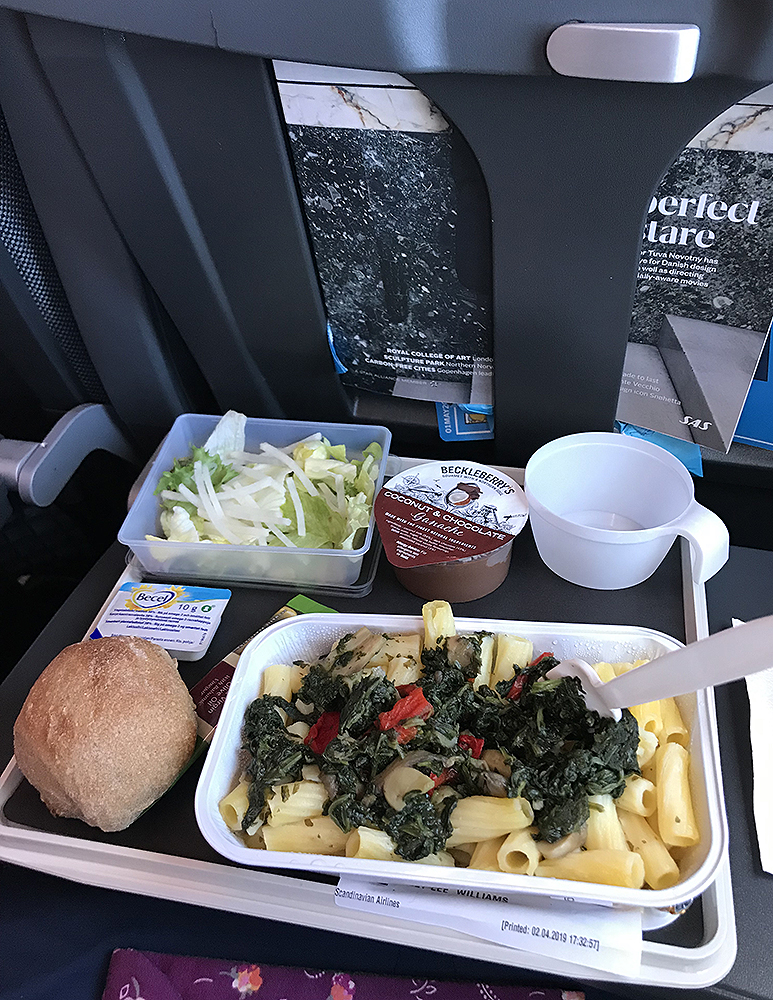
On the CPH to D.C. leg, I received a very unfortunate pasta dish. Unfortunate because (1) the pasta was overcooked and a bit gag-inducingly soft, and (2) the spinach-mushroom-tomato topping was simply flavorless. Ugh, what a textural nightmare! And look at that sad side salad. Whereas the previous salad at least had some color (and legitimately crisp lettuce), this one was so pale and limp and lifeless. And what are those bizarre pale sticks on top?! They had the texture of jicama but the flavor of nothing. Just sad. As was the dressing; that tube contains a vile, sweet, oily dressing that I hope never to encounter again. Even the roll was lackluster. (YMMV; the first time I flew this route, the roll was fine.) Redemption came in the form of dessert, a rarity on VGML orders. This chocolate-coconut ganache was legitimately delicious and legitimately rich, and I was so pleased when I saw it on my tray during the Copenhagen trip — I remembered how lovely it’d been from my last trip! It’s topped with toasted coconut flakes and truly makes up for the rest of this sad meal.

Don’t expect anything quite so lovely on your pre-landing snack, however. Especially not on the IAD — CPH route!

This meal includes applesauce (unsweetened if you get Lucky Leaf brand; sweetened if you get Mott’s), orange juice, a tiny sandwich, and either fresh fruit or a bag of extremely sweet dried fruit. And margarine, for some opaque reason. Maybe it’s meant for the sandwich? Butter would certainly improve it, because the sandwich is a big stack of nothingness, just bread stuffed with cucumber, tomato, lettuce, and some kind of flavorless spread. Seriously sad.

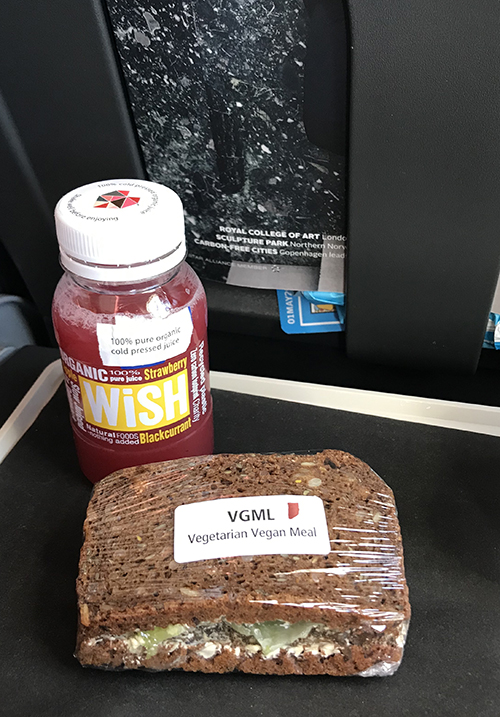
The pre-landing snack on the CPH — IAD route is marginally better for one reason only: cold-pressed juice. Legitimately delicious strawberry-apple-blackcurrant juice that I would pay real-world dollars for. Sooo good and tasty, a nice blend of sweet and tart. I received this juice both times I flew this route, and I was thrilled to see it again on my tray. The sandwich, not so much. Though you’d expect that dark, seedy, rich-looking bread to have a robust flavor to match its appearance, in truth it was quite flavorless. Perhaps we can blame the altitude, or the fact that it was served quite cold (urgh). The lackluster bread was filled with equally lackluster ingredients, so lackluster I cannot even recall them properly. Lettuce, perhaps? And a flavorless spread you can just see in that photo. Meh.

In summary, the vegan options on SAS exist, but they are not terribly exciting. They are, however, redeemed by a few true highlights: cold-pressed juice and delicious chocolate ganache. Both of those were served on the route originating in Copenhagen, so you can thank European air catering for those.

Have you flown a different SAS route? What was your meal experience?

Ethical Product Review: Will’s Vegan Store Biker Boots

Will's Vegan Store biker boots // govegga.com

Badass black boots: It’s my personal belief that every lady needs a pair. Put ‘em on when you need an extra boost of confidence or a reminder that, yes, you can do whatever it is you need to do today!

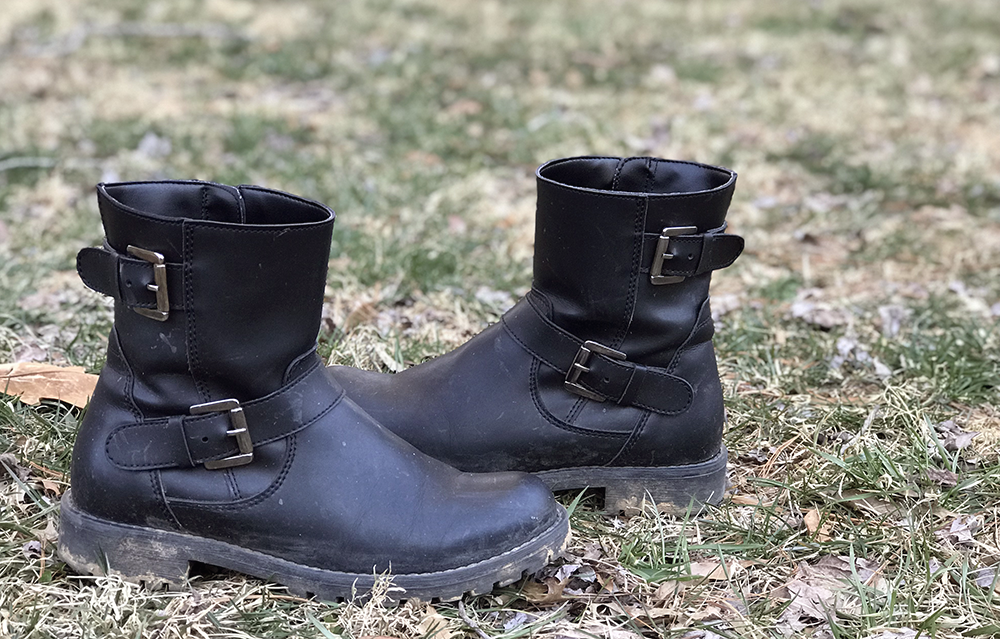
I haven’t had a real good pair of badass black boots in a while, but that changed when I purchased these kick-ass vegan biker boots from Will’s Vegan Store (formerly known as Will’s Vegan Shoes — they’re expanding!). I had actually been eyeing the work boots but didn’t love that the tread was so deep; it seemed a little at odds with the more delicate, slender profile of the work boots. If I’m gonna get a pair of boots with big, deep, treads, I want a similarly badass design to match! So I turned my attention to the biker boots, a style that hadn’t previously been on my radar. With an autumn trip to Estonia and Finland coming up fast, I knew I needed a sturdy pair of boots for city tromping and bog hopping, so I took the plunge and bought a pair.

Truthfully, I was dubious. I have skinny ankles and calves, and I kind of thought my legs would look like little sticks poking up out of the wide openings (hence my initial interest in the narrower work boots). But as soon as I received these suckers and zipped ‘em on, I was in love. Yeah, they opening is a little wide for my legs, but that’s the style. Plus, all the more room for slouchy, cozy socks!

Just as I did for my dock boots, I figured I’d write up a Will’s Vegan Store biker boots review for anyone who may be considering a purchase. Please check out the dock boots post for a little more info on Will’s in general, including why it’s one of my  favorite ethical vegan shoe companies.

Will's Vegan Store biker boots // govegga.comHow do Will’s Vegan Store biker boots fit?

I have a few different styles of Will’s shoes (bought both new and used), all size 39. )For reference, I wear a size 7.5 U.S.) I do find the sizing a little uneven — while my dock boots were snug from day one, the footbed sandals are a little loose and long, unfortunately. The biker boots are somewhere in the middle. The width works fine for my narrow feet, but when I first got them, my heels would sort of lift out of the back because they were a tad large overall. The solution? Add some soft gel insoles. They both provide comfort and take up a little room in the shoe. Doing that (and tightening the buckles) made a huge difference, and they fit perfectly now.

I also tend to wear these with cozy thick socks (like these) for maximum comfort and  warmth. (Note on those socks: I looove them and thought I’d read they were ethically made in the USA, but now I’m not so sure! Sad face.)

How is the quality?

I think Will’s in general are well made, and the biker boots are no exception. I’ve had them for about six months and wear them multiple times a week, and they’re not scratched or showing much wear. I will say that the soles have pulled slightly apart from the shoe proper in a couple small spot, but that hasn’t affected their watertightness. I’ll update if something changes, however!

Are the biker boots comfortable?

After adding a gel insole to perfect the fit, the biker boots are super comfortable! Not that they were problematic to begin with, but insoles make most shoes better. I wore these almost exclusively during my trip to Tallinn, where I was walking 7-10 miles each day, with no issues. I did make sure to break them in first, but even then only got one tiny little blister on my ankle (?!) that hasn’t bothered me since.

How warm are the biker boots?

I’ve worn my boots on and off through this winter, and I’ve never been cold — even though they’re not insulated. If I’m wearing a thin pair of socks, I occasionally double up, but I do that with most of my shoes. :) I wore these for one night during a trip to Montréal last December, and my feet were plenty warm — even though the temperatures dropped to 5˚F that evening!

Will's Vegan Store biker boots // govegga.comAre they waterproof? How sturdy are they?

These are sturdy shoes. Will’s markets them as water-resistant, not waterproof, though I’ve worn them in plenty of yucky conditions (see photo at left!) with no ill effects. Plus, because they have super deep treads, they provide great traction. I’ve worn them in light snow and rain, and they helped me complete a very muddy, very slippery, very steep hike in Austin on New Year’s Eve without falling once.

Are there any downsides to the biker boots?

If you’re planning any sort of maneuver that requires stealth, seek alternate footwear! Here’s why: The biker boots squeak. Not a lot, but noticeably. I don’t quite know why, but I do know that whenever I walk down the hall during an (uncharacteristically) quiet moment at the office, I feel very conspicuous. No big deal when you’re strolling down a busy city street, but not ideal for moments that require silence and/or stealth.


What did I miss? What else do you want to know about these fab vegan biker boots?


PIN IT

Review of Will's Vegan Store biker boots // govegga.com


Disclaimer: I was not provided with free shoes from nor compensated in any way for a review. (Although I would happily try another pair to review!) I simply bought the shoes and wanted to share my thoughts in a Will’s Vegan Store shoe review. This post does contain an Amazon affiliate link, however.

7 Practical Travel Tips for Tallinn, Estonia

Sign post in Tallinn, EstoniaInexpensive — yet well-curated — museums. Vegan food everywhere. Fairy tale-esque medieval architecture with surprise pops of Art Nouveau. Tallinn has it all! Yet somehow it remains just under the radar, popular with savvy travelers yet relatively unknown to the casual trip-taker. (Well, those based in the U.S., at least — I hear it’s a popular stag party destination for Euro bros!) Let me assure you: traveling to Tallinn is well worth your time. I thoroughly enjoyed my trip to Estonia last year, and I’ve put together seven practical travel tips for Tallinn to help you make the most of your time in this enchanting city. Read on, and let me know what I’ve missed!

Skip the taxi and opt for a 1€ tram ride into the city.

Although I wouldn’t call myself a budget traveler, I do prefer to splash out on the parts of my travels that really matter — memorable vegan meals, fun day trips, entry to interesting museums — while conserving cash elsewhere. That’s (partially) why I opt for public transport rather than an Uber or a taxi, and when possible I prefer to walk rather than take a bus, metro, or tram. In tiny Tallinn, you really can walk almost everywhere, but you’ll definitely want to seek transportation to and from the airport. Here’s the good news: You can buy a tram ticket from the airport to the city center for 1€. Yes. ONE SINGLE EURO. That is an AMAZING deal, especially considering that other European cities ask you to pay upward of 15€ for the honor of hopping on a crowded bus for your ride into the city. (Dublin, I’m looking at you!)

Tram tickets cost 2€ when purchased from the driver, but you can buy a QR ticket ahead of time for 1€. Simply download the pilet.ee app and purchase it there (international credit cards accepted). The ticket is good for one year from the time of purchase, so you can even buy it before leaving home. To use your QR ticket, enter the tram through the frontmost door and scan the QR code in the reader. (I took a screenshot of the ticket on my phone since I turn off my phone’s data/cellular plan when I’m abroad.) So easy and so cheap.

Note: You can also buy QR tickets for bus rides, and the same usage guidelines apply. Be sure to enter through the front door; the scanner in the middle of the bus doesn’t seem to accept QR tickets.

View of Tallinn from Toompea Hill

Don’t worry about being disconnected — free public wifi networks abound.

Start doing even the most rudimentary research about Estonia and you’ll quickly realize that Estonia was an early adopter in terms of internet connectivity. In 2005, Estonia piloted an online voting scheme, making it the first country to do so. Many other government services are available online, so it makes sense that Tallinn also provides plenty of free wifi hotspots around the city. You can find a map of these locations here; once you connect to the TallinnWifi network once, your phone should recognize the network the next time you pass through it. It’s a great way to check directions on the go or look up the hours of your dining destination. ;) (Of course, this is an unsecured, open network, so keep that in mind and maybe don’t email your banking password to someone while you’re logged on?!)

BONUS TIP: If you’re going to use your phone on the go, consider bringing a portable charger so you don’t run out of juice while navigating to your next destination.

Take in the view — and get a history lesson — on the KGB tour.

Though it might sound a little cheesy, the KGB tour at the Hotel Viru is a decent way to spend a few hours. In the 1970s, the KGB installed a monitoring station in the top floors of the Hotel Viru, which was essentially a state-run hotel where visitors from outside the Soviet Bloc were required to stay. Though the KGB officially denied that the floor housed anything beyond regular utilities and storage space, everyone knew KGB agents were stationed there, using listening devices planted throughout the hotel to monitor all the goings-on.

Today, some parts of the monitoring station have been preserved in a modest museum— and you can see them on a tour (11€) that departs from the ground floor of the hotel. The best part of my tour wasn’t the reconstruction of a Soviet office or the other artifacts from the period; truth be told, the museum itself is a little lackluster. What I really enjoyed was the history lesson. Our tour guide had grown up during the Soviet occupation and shared plenty of real-life anecdotes and stories that brought depth to the facts, figures, and dates.

But what really earns the KGB tour a spot on my list of travel tips for Tallinn is that it comes with a fabulous view. The Hotel Viru is one of the tallest buildings in the city center, and you’ll have ample opportunities to snap photos from the balconies. Although it was rainy and grey during my visit, I still captured a few neat shots.

BONUS TIP: If you do opt for a KGB tour, buy your ticket in advance! You can stop by the Hotel Viru and go to the front desk to make a purchase, or order online. The tour meets and begins in the lobby (look for the signage), and on the day I took it, a few people were turned away because they hadn’t bought tickets in advance and the tour was full.

Find a (nearly free) concert to attend.

Many of my most moving and lasting travel memories include music, from stumbling across an outdoor opera concert in Rome to serendipitously visiting a cathedral in Vienna just as a traveling college choir began an a cappella performance. And then there was the moment when I — traveling alone for the first time, grieving the sudden death of my dog — became besotted with a busker playing a full grand piano in the middle of an Antwerp pedestrian plaza, sending both classical songs and pop music soaring into the air and providing a moment of calm in a busy city.

While I can’t promise you’ll have an equally moving experience in Tallinn, I can tell you that there are worse ways to spend a half hour than timing your visit to St. Nicholas’ Church (also called the Niguliste Museum)  with a free organ concert. You’ll find the church in Toompea, a hilly section of the city that houses Toompea Castle and offers plenty of great views. The museum houses both temporary contemporary art exhibits along with more permanent exhibits, including a fantastic Danse Macabre.  Entrance to the church/museum is 6€; half-hour organ concerts take place on Saturdays and Sundays at 4 p.m. and are included in the price of the ticket.

BONUS TIP: Tallinn’s Dome Church also offers organ concerts on Wednesdays at 5 p.m. as part of a (free) prayer service and on Saturdays at 12 p.m. with a small donation.

Seagull on the ferry from Tallinn to HelsinkiIf you’re taking the ferry to/from Helsinki, know your terminal.

One of the best overnight or day trips from Tallinn is a visit to Helsinki, Finland’s capital. Three companies — Eckerö Line, Tallink, and Viking Line — operate ferry trips across the Baltic Sea; you can compare prices and book your tickets here. (Don’t be afraid to mix lines to save money — I traveled on Tallink to Helsinki and on Eckerö back and found no real difference between the two.) After booking, make sure you look up which terminal your company leaves from! While the Tallinn port is not huge by any means, there are separate buildings for the different lines and they’re maybe 5 to 10 minutes apart on foot. Save yourself the stress of ending up at the wrong terminal and look it up in advance.

BONUS TIP: Once you get to the Tallinn ferry terminal, you’ll need to print yourself a boarding pass if you’ve purchased your ticket online. If you have a digital version of your ticket stored on your phone, you probably won’t be able to check in using one of the digital automated kiosks because your digital ticket won’t have a security number on it. Instead, head to the ticket office staffed by a real live person — they’ll get you sorted! (This applies to Tallink tickets; I’m not sure about how the other lines operate.)

If you travel during the colder (or shoulder!) months, wear layers.

I visited Tallinn in early October and was treated (ahem) to some chilly temperatures. Nothing terrible, but there were some rainy, windy 40˚ F days that made me real glad I’d packed a warm jacket, a scarf, and my fingerless gloves. Here’s the thing, though: Many museums and restaurants seemed to overcompensate for the nippy weather outside by keeping things quite toasty inside. Now, I’m the type of perpetually chilly person who’d rather be overheated than cold, so I didn’t mind at all. But if you get cranky when you’re hot, you might want to wear layers so you don’t become miserable while wandering around, say, the Tallinn City Museum for a few hours. (Note that most museums have coat racks or lockers, so you can shed your layers  while you get cultured.)

Get out of the city!

You can easily while away a few good days in Tallinn. But don’t limit yourself to the city — get out of town and experience some of Estonia’s beautiful natural lands. I booked a day trip to Lahemaa National Park with Traveller Tours and Day Trips and had a great time. These tours include a driver and a small group; mine included two women (also from Maryland; go figure), an older British man with plenty of travel stories, and a young German teacher taking advantage of a school break. Our tour guide was entertaining in a wry, dry Estonian way, sharing tidbits about his own life and his take on Estonian culture while giving us the broader historical context for the country’s past.

We stopped at Estonia’s largest waterfall (all of 8 meters/26 feet high!) as well as a little coastal park, where we walked to the sea and felt the salty, cold air whip our faces and hair. Then we headed to a derelict manor — a relic of the time Sweden ruled over Estonia — and wandered the grounds. Next we visited a little fishing and maritime museum run by an avid artist and fisherman. His wife made and served us lunch; I’d told our guide that morning that I was vegan, and she provided a simple yet tasty vegetable and bean dish for me while the others had fish.

Our main stop for the day was Lahemaa National Park and its 1.5-mile bog walk. Tramping on the wooden footpath over the spongy bog, our little group breathed the clean Estonian air and got lost in our thoughts. Estonians love spending time in nature, according to our tour guide, and make trips to the forest to hunt for mushrooms or just take a hike pretty regularly. The bog walk was an otherworldly experience, and although the cold damp air seeped right into my bones and left me chilled for the rest of the day, I’m so glad I opted for the day trip.


Thanks for reading these travel tips for Tallinn, Estonia — and let me know if you decide to go!


PIN IT

Seven practical travel tips for Tallinn, Estonia // govegga.com

This post contains affiliate links, which help me keep the lights on here at Go Vegga.

How to Make Vegan Minestrone: Easy and Pantry-Friendly!

A quiet sort of chaos reigns in my household these days. We’ve been fostering a super sweet hound mix named Margaret for four (!) months, and she’s got all sorts of fun little health issues that keep cropping up. The latest? Polyps in both ears, requiring an expensive, complex surgery. As the rescue tries to find a surgeon who’ll offer a discount, they’re fundraising to mitigate the (substantial!) cost of the surgery. (Margaret isn’t in pain, by the way, but the polyps are causing chronic ear infections and could become malignant. She is truly the gentlest, sweetest little girl, though, and I hope an adopter steps up soon.)

For the last two weeks, we’ve also been dealing with a (human) health crisis on Steven’s side of the family. The details aren’t mine to share, but we (mostly Steven!) have been making lots of long trips to the hospital and dealing with the uncertainty of a potentially serious affliction. It’s been draining and scary and exhausting.

And on top of all that, our beloved Prius started making some seriously odd noises — like a prop plane taking off. Our mechanic thinks it’s caused by low tire treads and hasn’t been able to find anything more serious, but as someone who deals with car-related anxiety, the noises leave me discomfited.

Basically, we’ve got a lot of ongoing, unresolved issues. For two chronic worriers prone to anxiety, it’s… stressful.

In times like these, healthy eating tends to fall by the wayside, even for the best of us. We haven’t meal-planned in weeks, grocery trips have taken a backseat to hospital trips, and we’ve been relying on a combination of leftovers, whatever we can scrounge (hey-o, random pot of black-eyed peas, kale, and pizza sauce!), and the occasional dinner shared by our super thoughtful friends who happen to be vegan and live just down the street. Things are finally getting back to normal, but we’re not quite back in our regular meal-planning mode yet.

Collard leaves from the gardenI have managed to make one solid meal in the past couple weeks, though: minestrone. A steaming hot, big ol’ pot of veggie-laden soup, perfect for delivering a dose of the nutrients we’re sorely lacking. I put it together with all sorts of scraps found in the fridge — half a jar of canned tomato sauce from god knows when, baby carrots, a jar of roasted red peppers, some sad little garlic cloves beginning to shrivel and sprout. I didn’t have celery, so I forewent the traditional mirepoix base. I added some little collard leaves picked from the garden; thank goodness for cold-hardy vegetables! Green beans and broccoli — the only fresh veggies in the fridge — went into the pot, along with a small can of diced tomatoes and a big can of cannellini beans. A liberal dusting of herbs, plenty of nooch, and some veggie bouillon rounded out the flavors, and elbow macaroni provided the pasta component. A nice long simmer while Steven drove home from his hospital visit helped meld all the flavors, and we sat down to big bowls of surprisingly delicious soup two Sundays back. A brief moment to catch our breaths, and much appreciated.

So, today, in the style of my template for making lentil soup, a template for making minestrone with whatever you’ve got on hand. Start with these five tips for homemade minestrone, and then read on for more detailed instructions

Cook your pasta separately.

My texture issues might be speaking here, but who wants to eat leftover soup laden with soggy, bloated pasta? Avoid that nastiness by cooking your pasta separately (in bulk) and adding individual portions to each serving of minestrone.

Embrace liberalism (with your seasonings).

Do not skimp on the herbs! Big scoops of dried basil, oregano, parsley, and thyme make all the difference. I’d opt for at least one teaspoon of each herb per 3-4 cups of liquid, but don’t sweat the measurements.

Say yes to yeast.

A big scoop of nutritional yeast adds a funky kick you’d get from parmesan in a non-vegan minestrone. Don’t skip it!

Get creative with your veggies.

Do not feel beholden to traditional minestrone recipes that “suggest” a very particular blend of vegetables! Instead, feel free to add whatever’s in your fridge or freezer. Aim for a blend of veggies with different sizes and shapes to keep things interesting.

Take your time.

Tempting thought you might find it to dig in to your minestrone as soon as you’ve dumped all the ingredients in the pot, give it some time to rest! Simmer your soup for at least an hour to build and deepen your flavors. (If you’re using any veggies that are prone to sogginess, feel free to add them closer to serving time.)

Vegan minestrone soup // govegga.com
One-Pot Vegan Minestrone

Serves 4-6

The basics

  • 2 T olive oil (you can use more if you prefer, or even just water-sauté the veggies if you want to avoid added oil)
  • Diced onion, carrot, and celery (the amounts don’t really matter, but aim for about 1/2 cup of each)
  • 3-5 cloves garlic, minced
  • 1 teaspoon dried basil
  • 1 teaspoon dried thyme
  • 1 teaspoon dried oregano
  • 1 teaspoon dried parsley
  • 1/4 cup nutritional yeast
  • A small shake red pepper flakes (optional)
  • 3-4 cups vegetable broth (I like Better than Bouillon)
  • 14 ounces diced canned tomatoes (if using whole, smash them up a bit)
  • 14 ounces crushed tomatoes (optional but recommended; use 8 ounces tomato sauce and a little extra broth in a pinch)
  • 14 ounces cannellini beans (or other white beans)
  • Salt and pepper to taste
  • 6 ounces small pasta, like ditalini or elbows

The veggies (choose 2-3)

  • 1/2 to 1 cup green beans, ends trimmed and sliced into 3/4″ inch pieces
  • 1/2 to 1 cup small broccoli florets
  • 1/3 cup roasted red peppers, roughly chopped
  • Additional 1/2 cup sliced carrots
  • 2 cups greens, roughly chopped (kale, collards, spinach)
Method

Heat the olive oil in a large stockpot on medium. When it begins to shimmer, add the mirepoix (onion, carrot, and celery) and garlic. Heat for 3-5 minutes, stirring frequently so nothing burns, until the onion is translucent.

Add your spices and give everything a good stir, then add all remaining ingredients except pasta. Bring everything to a boil, give it a good stir, and then turn it down to low. Let simmer for about 45 minutes, stirring occasionally.

While the soup is simmering, cook your pasta according to the package’s instructions, then set aside.

After about 45 minutes, check to ensure that all veggies are nice and tender. Season with salt, pepper, and more nutritional yeast to taste. Serve piping hot, with 1/3 to 1/2 cup of cooked pasta per bowl. Top with additional nutritional yeast or vegan parmesan as desired.

PIN IT

How to make vegan minestrone soup // govegga.com
Note: This post contains affiliate links, which help keep the lights on. Thanks for supporting Go Vegga!

Raaka Unroasted Vegan Chocolate Review

Among Steven’s many excellent qualities is one that makes birthdays and holidays extra fun: He is a terrific gift-giver. He’s the type of person who keeps a running list all year long, adding ideas gleaned from offhand comments or the merest suggestion. His gifts are always thoughtful and frequently generous. For my 25th birthday — a year in which I’d come up with a list of 25 goals to accomplish — he made what was essentially a birthday advent calendar, with one box for each goal. Once I accomplished the goal, I’d open the box to find a trinket to commemorate my success: a sachet of saffron for a cooking-related goal, that sort of thing. For my 30th, he gave me a generous gift certificate to a local photography school so that I could take classes, a nod to my desire to improve my photography and to my desire to focus more on experiences than physical things. Steven derives genuine joy in giving the perfect gift, without expecting the recipient to reciprocate with something equally perfect. (Although I was pretty proud this Christmas when I got him a handmade Slytherin robe, which seemed to delight and surprise him.)

All this is to say that even my stocking is a thrill to open come Christmas morning. This year, along with some other lovely stocking stuffers, Steven included three chocolate bars from Raaka, an ethical chocolatier that produces some truly wonderful vegan chocolate bars. The gift ticked all the boxes for me, a lover of high-quality dark chocolate who tries to support small companies that incorporate transparent, ethical practices in their supply chain. I hadn’t heard of the brand before I received Steven’s gift, but I was glad to learn about them.

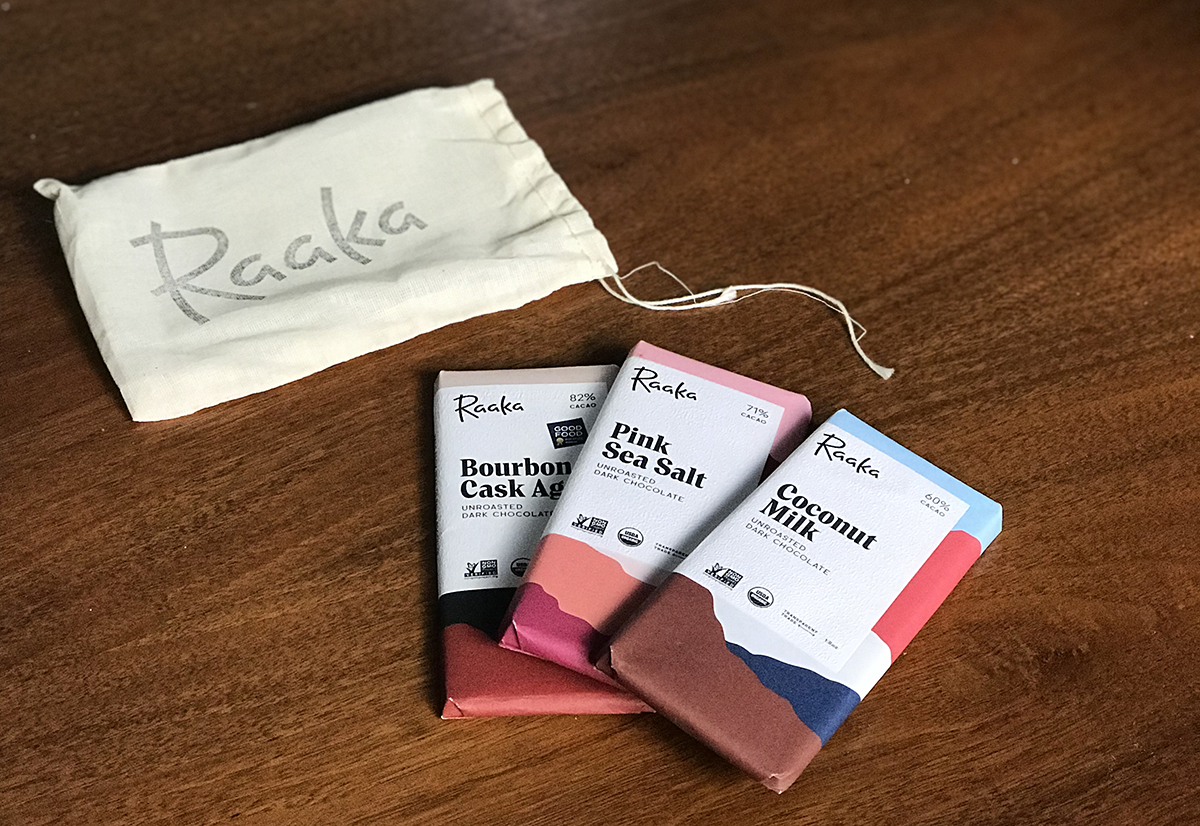
Raaka differentiates itself from other chocolatiers by focusing on single-origin unroasted beans and by being truly transparent about their processes. I received three bars, which came packaged in a nice little muslin bag I’ll happily use to stash toiletries during my travels. Here are the bars I tried. Spoiler: I love them all.

Vegan Raaka chocolate bars


Bourbon Cask Aged

Raaka describes this bar as their “tuxedoed sophisticate,” and they’re not wrong. The company barrel-ages their single-origin cacao in bourbon casks, imbuing the chocolate with a deep, rich, complex flavor. Would I have described this chocolate as bourbon-infused had I not read the label? Probably not. Is it still delicious? Yes, it is.

Pink Sea Salt

I am fully here for the trend of sprinkling salt atop an otherwise sweet chocolate! This bar fulfills all my salty-sweet dreams, with a grains of sharp pink salt liberally dashed onto a 71% cacao bar of chocolate. It’s utterly delightful.

Coconut Milk

This is easily the best vegan chocolate I’ve had in a long, long time. It hits a perfect balance between milk and dark chocolate, melting on the tongue like a milk but with the complex flavors of a dark, and very little actual coconut flavor. It’s light and smooth, a creamy delight that goes down easy. I’m exercising restraint and making this bar last as long as I can!


Vegan Raaka chocolate bars

If you can’t tell, I’m officially a Raaka convert. This is quality chocolate prepared with love and respect. I’m not sure that I’d identify it as unroasted if I didn’t know it in advance, but whatever they’re doing, they’re doing right. Plus, the labels are pleasing to look at and the price is comparable with other artisanal chocolate bars (which is admittedly steep). It’s chocolate to be savored, eaten slowly a square at a time. My kind of chocolate.

Raaka has quite a few other flavors, and I’m looking forward to trying them. I love the idea of the cab sauv bar, and they just introduced an oat milk bar (!?!) that sounds really interesting.

Let me know your favorite ethical vegan chocolate brands… if only to give Steven ideas for my March birthday! :D

Vegan Afternoon Tea at Le Parloir in Montréal, Canada

I’ve finally achieved a dearly held dream: enjoying a full vegan afternoon tea!

Vegan afternoon tea at Le Parloir in Montréal, CanadaFor years I’ve read fellow vegan blogger Jenny’s accounts of the vegan afternoon teas she’s enjoyed all over the world (okay, mostly the UK) and wistfully wished for a tea of mine own. I’ve salivated over the savories and pined over the pastries, dreaming of a day when I’d get three tiers of treats all to myself.

My chance nearly came this past spring. For my birthday, Steven’s mom very sweetly gifted me (and Steven!) passes to enjoy a special vegan afternoon tea being offered at a tea shop in Ellicott City, a nearby historic mill town. The shop doesn’t typically offer vegan snacks but was partnering with a local vegan society for a one-off event, and I was quite excited to attend. Then the owner had an emergency in the family and had to reschedule the event, understandably. Before she could reschedule, climate change took its toll: A series of horrific floods swept through Ellicott City, and the tea shop flooded and had to close, likely permanently. Sad for me, but truly tragic for the town. My afternoon tea dreams were on hold.

And then Steven and I booked a winter trip to Montréal. I’d been itching for a December trip to somewhere in Europe where we could visit Christmas markets, but it wasn’t in the cards this year. A long weekend in Montréal was a more than passable substitute, and when a search for “vegan afternoon tea in Montréal” led me to discover that sweet tea shop Le Parloir offered a vegan afternoon tea, I was sold. I made a reservation and counted down the days till three tiers of treats would be mine.

We’d booked our afternoon tea for 1:00 p.m. on a Saturday and found the tea shop about half full when we arrived. After being seated, we waited about five or so minutes before getting the menu and a run-down of how to order, and that’s pretty indicative of the overall pace at Le Parloir: relaxed! This is the time to chill out, get cozy, and while away a few hours. (We were glad to escape from the biting cold outdoors; the temperature hovered around 5˚F on that day!)

Vegan afternoon tea at Le Parloir in Montréal, CanadaWhile you can order vegan a la carte options, we went straight for the full three-course vegan afternoon tea, served on (yess!) a three-tier cake stand. Priced around $25 Canadian, it was a bargain thanks to the favorable exchange rate for us Americans. (How rare it is I get to say that…!) Steven opted for a black chai blend, while I chose a jasmine green tea. Our piping hot iron pots arrived in short order, complete with hourglasses to time the steepage. Steven enjoyed his chai; my jasmine wasn’t quite as flavorful as I prefer, but still fine. We sipped our teas and did some covert people-watching while waiting for our trays. Interestingly, of the three other pairs of diners present during our meal, at least two people ordered the vegan tea, and one ordered a vegetarian spread. :)

A woman who I assume to be the shop owner delivered the vegan tray to a lady sitting behind us, explaining each dish, but we unfortunately didn’t get the full run-down when the waitress came with our cake stands a bit later. No matter; the food didn’t really require much explanation.

Vegan afternoon tea at Le Parloir in Montréal, CanadaFor the savories, we enjoyed five tidbits: a savory tart with walnut-mushroom pâté, a slice of toasty bread with beetroot hummus and radish slices, a (heart-shaped!) open-faced cucumber-cream cheese sandwich, two egg-salad finger sandwiches, and — my favorite — two tangy, mustard-y, pickle-laden sandwich triangles. I’m not sure exactly what the filling was on those latter two sandwiches; I’d guess it might’ve been chickpea-based, but it was really tasty, especially served on a soft, nutty wheat bread.

We slowly munched our way through the savories before moving on to the middle tray: the scone course! We received one towering scone apiece, and a good ‘un it was. Flaky, nice and tall, just barely sweet, with a tender crumb. Scone perfection, just about. The scones came with a small pot of blueberry compote, which I found just a tad too sweet. (A bit of cream would have helped cut through the sugar!) The tray also included a cute little pot of panna cotta, the only misstep of our entire afternoon tea. I think this dish relied on agar to thicken it — too much agar. It was basically a solid, flavorless white block — not terribly appetizing. I dutifully dug through mine to discover an absolutely perfect mango-passionfruit coulis at the bottom, a tangy-sweet sauce that paired really nicely with the toasted coconut flakes sprinkled atop the panna cotta. This would’ve been really lovely if the middle layer were a softer vanilla pudding!

Vegan afternoon tea at Le Parloir in Montréal, CanadaAt last we reached the dessert plate. Stomachs straining, we indulged in three treats: a tiny vanilla cupcake with almost painfully rich and thick frosting, a sweet little berry mousse tart topped with fresh berries, and a few candied orange jelly slices coated in rich dark chocolate. I could take or leave the cupcake, but not through any fault of its own; I’m just ambivalent about cupcakes in general these days. The other two sweets were lovely, and the dark chocolate oranges made for a wonderful last bite. I was pleased to pace myself enough to finish everything — it was a lot of food, all told!

I’m so glad we were able to make it to Le Parloir to enjoy a vegan afternoon tea in Montréal! I enjoyed the whole experience, from the kitschy-cute décor to the slow pace to the tasty little nibbles we enjoyed. And it’s fair to say that my appetite for afternoon tea will only increase now that I’ve had my first taste!

IF YOU GO

  • You don’t need to make a reservation at Le Parloir, but if you’re going on the weekend, you might want to do so just in case — they sometimes host bridal and baby showers, which can take up a large portion of the tea shop. You can call or send a Facebook message to make a reservation.
  • You don’t need to reserve a vegan tea in advance, but when I messaged the owner to make my reservation, she said it’s helpful for them to know in advance if multiple people will be ordering vegan teas. So you might as well specify when you make your reservation!
  • Take your time! Of the three pairs of diners who were there when we arrived, two were still there when we left.

PIN IT

Vegan afternoon tea at Le Parloir in Montréal, Canada // govegga.com

Where to Find Ethically Made Vegan Winterwear

Original photo by Roberto Trombetta on Flickr // vegan ethical fashion

Original photo by
Roberto Trombetta on Flickr

Last updated 09/2019.

A few weeks ago I stumbled across a big ol’ master directory of ethically made winterwear, listing everything from thermal undies to big puffy parkas. And while it was a pretty comprehensive list, it was also not entirely relevant to me as a vegan: If I wanted to see which brands had products free of down or leather or wool, I had to click through and do my own investigation. Plus, it didn’t include a few all-vegan brands that I know produce their products ethically. I sighed and thought to myself, why not compile my own list of brands producing ethically made winter clothes without animal products? And thus, this list.

I’ve categorized this post by product type to help you find the specific items you need, so some brands are included in multiple sections. I’ve also marked fully vegan winterwear brands in case that’s important to you, and I’ve included what rating the company gets from Good On You, an app that evaluates brands’ ethics in terms of labor, the environment, and animal welfare. (Learn more here.) The app is fairly new and has mainly focused on Australian brands, so not all brands mentioned here are rated. That doesn’t mean they are not using ethical practices, however!

Let me know if I’ve missed your favorite brand!

Where to find ethically made vegan winter coats

Brave Gentleman (fully vegan)

Who they are and what they offer: Don’t let the name fool you: Brave Gentleman doesn’t just produce vegan clothing for men. According to its FAQ, the brand is “geared toward individuals who enjoy menswear aesthetics because there is a disproportionate emphasis on femme lifestyle products in the “eco”, “green” and “ethical” realm.” Fair enough! As of November 2018, the brand has just a few vegan jacket styles, but this tweed-y double-breasted overcoat is a great option if you’re looking for a classic overcoat style. (It’s also available in houndstooth, plaid, and solid colors.)

Why it’s ethical: Brave Gentleman ensures that workers receive a living wage and healthcare coverage. All styles are vegan, and the brand works to minimize pollution and use sustainable materials.

Good on You rating: Not yet rated

How to save: I haven’t seen Brave Gentleman offer sales, but I don’t follow this brand terribly closely. Checking BG out on social media might be your best bet.


Finisterre

Who they are and what they offer: Founded with the goal of producing sustainable garments for British surfers (yes, really), Finisterre has a few solid vegan options among its wool-heavy line. The packable Nimbus is available for both women and men, and many of the parkas are also free of animal products.

Why it’s ethical: The company uses eco-friendly materials like recycled polyester, and it was founded with sustainability as a key practice. It’s also a B Corp. Finisterre doesn’t use leather, fur, angora, or down.

Good on You rating: Good

How to save: Sign up for the mailing list for a discount, and be sure to check the sale sections.


Hoodlamb (fully vegan)

Hoodlamb's sustainably made vegan Nordic puffer

Image copyright Hoodlamb

Who they are and what they offer: This cheeky Amsterdam-based company relies on hemp — that darling of the sustainable fashion world — to create parkas, bombers, hoodies, sweaters, and more for both women and men. Need something über-warm to get you through a Nordic winter? Try one of the thigh-length puffers. Seeking something more casual to wear indoors to avoid cranking up the heat? Check out one of the long hoodies.

Why it’s ethical: Clean-growing hemp is the backbone of most products, and the company uses certified organic textiles in its shell fabric. All products are vegan, and Hoodlamb carefully chooses the factories that produce its garments (see more here).

Good on You rating: Great

How to save: Full-price items are not cheap, but sign up for the mailing list to get access to sales. You’ll find deep, deep discounts in the off-season.


Patagonia

Who they are and what they offer: This well-known activewear brand offers plenty of vegan options for men, women, and kids. The Nano Puff jacket protects you from winter and water; try the Snowbelle jacket for a versatile, 3-in-1 option.

Why it’s ethical: Patagonia is arguably a pioneer in the realm of ethical activewear; it uses eco-friendly materials, has a repair and reuse program, incorporates many sustainable practices, and is quite transparent about its supply chain and workers’ wages. It’s also a certified B Corp.

Good on You rating: Good

How to save: Check out the web specials section or shop for Patagonia products at various outdoorsy stores. Moosejaw, REI, and Sierra Trading Post all sell Patagonia and have clearance/sale sections.


Save the Duck (fully vegan)

Who they are and what they offer: An Italian brand, Save the Duck makes down-alternative coats, jackets, and vests for women, men, and children. You’ll find both puffer styles and parkas in just about every color.

Why it’s ethical: Save the Duck uses no animal products and says its garments are “environmentally friendly.” (See below for more info.)

Good on You rating: Not good enough

(Save the Duck claims to use sustainable practices but hasn’t provided enough information for Good on You to fully evaluate those claims. I’m not sure I want to keep Save the Duck on this list, given those concerns, so let me know what you think.)

How to save: You’ll pay top dollar for brand-new items; sign up for the mailing list for the occasional sale. (Last Black Friday, discounts peaked at 40%.)


Vaute Couture (fully vegan)

Photo by Anthony TwoMoons for Vaute Couture; Belden coat

Photo by Anthony TwoMoons for Vaute Couture

Who they are and what they offer:  Founded by designer Leanne Mai-Ly Hilgart, this fashion-forward brand made its name offering hand-sewn, ethically made vegan winterwear for women and men. The Belden is a classic women’s style, and I love the Charles for men. Vaute even makes gender-neutral styles! (I’ve also written more about Vaute Couture here.)

Why it’s ethical: This vegan brand relies on sustainable materials and ensures that all its products are made in the USA by employees making a living wage.

Good on You rating: Great

How to save: Check out the clearance section for discounts, and sign up for emails to get notified.

Note: Vaute Couture will be on hiatus after this season as Hilgart figures out what to do with the brand and tries to scale up. Read more here.


Where to find ethically made vegan winter boots

While many ethical footwear companies offer vegan boots, I’m only featuring styles that are specifically designed for winter. So you won’t find vegan dock boots, work boots, Chelsea boots, etc. on this list. As such, please consider this a curated, highly subjective list, and know that more options exist if you don’t need heavy-duty winter boots designed to keep out the snow, keep you warm, and keep you from slipping on ice!


Beyond Skin (fully vegan)

Who they are and what they offer: A vegan company offering dozens of styles for women, Beyond Skin has baked ethics into its business philosophy. Serious vegan winter boot offerings are scarce, but check out the Misty vegan sheepskin boots (also available in black) if you want an Uggs-esque look. (Note that as of November 2018, Beyond Skin only offers women’s shoes but says it’ll be launching a men’s collection soon.)

Why it’s ethical: Beyond Skin strives to use recycled materials when possible and produces its shoes ethically in Spain.

Good on You rating: It’s a start

How to save: Check the sale section!


Bhava Studio (fully vegan)
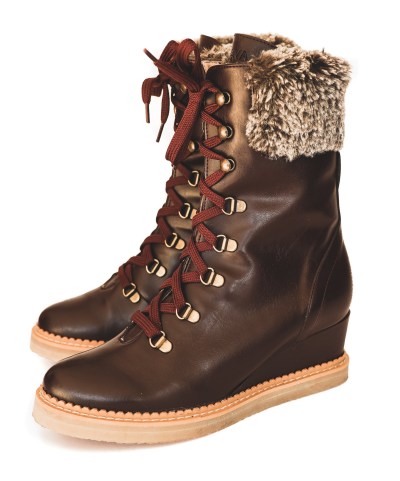
Photo copyright Bhava Studio

Who they are and what they offer: This small, woman-owned vegan company produces a limited line of fashion-forward women’s shoes — including some extremely stylish winter boots. Check out these faux fur-lined combat-style winter boots and these winter platforms (!) in particular.

Why it’s ethical: Bhava uses recycled materials and organic cotton and manufactures its shoes in Europe under fair labor conditions. It’s also committed to promoting a healthier approach to fashion, focusing on the idea that less is more when it comes to your closet. Learn more here.

Good on You rating:  It’s a start

How to save: Use my referral link to sign up for Bhava’s rewards program — you’ll get $30 off your first purchase. Once you’ve joined the program, you can earn points by completing relatively simple tasks (liking Bhava on Facebook; completing your profile) and redeeming the points for gift cards. And be sure to follow Bhava on Instagram for access to special pre-order sales.


Jambu

Who they are and what they offer: Sporty shoes with a bit of style is the name of the game at Jambu. While winter boots don’t make up the majority of their line, you’ll still find a few vegan styles for the colder months. (Note that although Jambu does offer some men’s shoes, their selection is very limited — women will have better luck with this brand.) You’ll find all the vegan options here; try the Evans boot if you’ve got light winters; check out Lorna if you need serious warmth and traction.

Why it’s ethical: Jambu has an impressive variety of animal-free shoes for all seasons, and they say their manufacturers in China are “strictly monitored.” (I can’t find much information on their overall sustainability practices, and I’m a little skeptical about their manufacturing. I’m not 100% sure they belong on this list and will reach out to the brand for more details.)

Good on You rating: Not rated yet

How to save: Check the sale section for deals, or get a $10 discount on your purchase of $50 or more with my referral link. (Also, fellow vegan blogger Amey is a Jambu ambassador and frequently offers special discount codes — check out her vegan Jambu reviews for details!)


Kamik

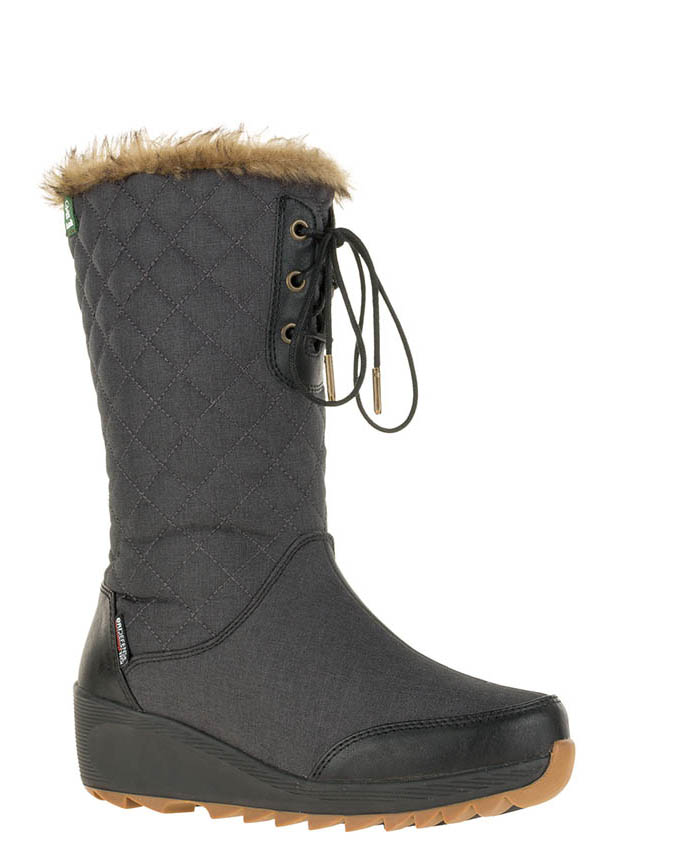
Kamik vegan winter bootsWho they are and what they offer: A family-owned Canadian brand, Kamik sells winter boots (along with rain boots and sandals) for men, women, and kids. A vegan filter makes it easy to find animal-friendly options; there are plenty of vegan winter boots for women this season. Options range from these no-nonsense tall snow boots to this fun pair — they look like moon boots to me! (I own an older style and really like them — they’re cute without being too trendy, and they have nice sturdy treads perfect for icy conditions.)

Why it’s ethical: Kamik is working toward a zero-waste production facility, uses recycled materials in their boots, and makes the majority of their products in North America. Plus, they offer a recycling program so your old and well-loved footwear doesn’t end up in a landfill.

Good on You rating: Not yet rated

How to save: Subscribe to their email to get deals or check the banner near the top of the page for special sales. You can sometimes also find marked-down boots on Amazon.


Vegetarian Shoes (fully vegan)

Who they are and what they offer: An OG vegan shoe brand based in the UK, Vegetarian Shoes offers plenty of styles for men and women — including a few winter-appropriate options. The unisex Ice Patrol style is a great no-nonsense option, or try the Caribou if you live in gentler climes.

Why it’s ethical: Vegetarian Shoes uses no animal products and ensures that workers are treated fairly. That said, I haven’t been able to find much information about the products and materials they use — I need to look into this a little more!

Good on You rating: Not yet rated

How to save: Check the sale section!


Where to find ethically made vegan winter sweaters/jumpers

American Giant

Who they are and what they offer: American-grown cotton and American-made garments for both men and women are at the center of American Giant‘s business model. Check them out if you’re in the market for casual apparel — think sturdy pullovers, heavy-duty (yet stylish) moto sweaters, and cozy hoodies. The company offers free returns on any item at any point in time for any reason, a quality guarantee that demonstrates how strongly they stand behind their products.

Why it’s ethical: Everything is made in the USA, and the vast majority of products are made of cotton. (Note that American Giant just introduced a merino-blend sweater.)

Good on You rating: Not yet rated

How to save: Discounts are rare, but sign up for the mailing list so you get first dibs on their yearly sale. New customers can also score 15% off with my referral link.


PACT Apparel

Who they are and what they offer: My favorite source for fair-trade, organic cotton basics (think hoodiessocks, and undies) for men, women, and kids, PACT also recently introduced a line of sweaters. This cable-knit tunic sweater looks lovely and cozy, but I really like the oval cardigan. In fact, I recently took advantage of a sale to buy it at half price. The thistle heather color is just gorgeous!

Why it’s ethical: Organic cotton, fair-trade practices, and no animal products make PACT one of the best options out there.

Good on You rating: Great

How to save: Use my referral link and get 20% off your first order! Then sign up for PACT’s mailing list for frequent discounts, like the aforementioned half off a single item.


Where to find ethically made vegan winter hats, gloves, mittens, scarves, and more

Hoodlamb (fully vegan)

Hoodlamb's sustainably made vegan infinity scarf

Image copyright Hoodlamb

Who they are and what they offer: This cheeky Amsterdam-based company relies on hemp — that darling of the sustainable fashion world — to create parkas, bombers, hoodies, sweaters, and more for both women and men. Happily, they also offer some lovely accessories, including a few for children. I love me an infinity scarf, and this faux fur-lined hat looks so cozy. Shopping for kiddos? They’d look adorable in this cute beanie!

Why it’s ethical: Clean-growing hemp is the backbone of most products, and the company uses certified organic textiles in its shell fabric. All products are vegan, and Hoodlamb carefully chooses the factories that produce its garments (see more here).

Good on You rating: Great

How to save: Full-price items are not cheap, but sign up for the mailing list to get access to sales. You’ll find deep, deep discounts in the off-season.


Where to find ethically made vegan socks and vegan base layers for winter

Why lump vegan base layers and vegan winter socks together? For one, they serve a similar purpose in my mind. But also… there just aren’t a lot of ethical companies making vegan versions of these items! Yes, you can find vegan socks pretty easily, but few are what I’d call winter-specific. Honestly, I usually just double up on my socks if I really need to keep warm in the winter! 

PACT Apparel

Who they are and what they offer: PACT offers fair-trade, organic cotton basics (think hoodiessocks, and undies) for men, women, and kids. I think you could also get away with using their leggings as base layers.

Why it’s ethical: Organic cotton, fair-trade practices, and no animal products make PACT one of the best options out there.

Good on You rating: Great

How to save: Use my referral link and get 20% off your first order! Then sign up for PACT’s mailing list for frequent discounts, like the aforementioned half off a single item.


Patagonia

Who they are and what they offer: This well-known activewear brand produces some of the best base layers for vegans looking to avoid wool. Patagonia’s Capilene base layers come in myriad weights, styles, and sizes for women, men, and children and use a recycled polyester fabric to keep you cozy. Just be sure to avoid the Capilene Air line — that one is blended with merino (boo!).

Why it’s ethical: Patagonia is arguably a pioneer in the realm of ethical activewear; it uses eco-friendly materials, has a repair and reuse program, incorporates many sustainable practices, and is quite transparent about its supply chain and workers’ wages. It’s also a certified B Corp.

Good on You rating: Good

How to save: Check out the web specials section or shop for Patagonia projects at various outdoorsy stores. Moosejaw, REI, and Sierra Trading Post all sell Patagonia and have clearance/sale sections.


A few notes and thoughts
  • I think there’s a real discussion to be had about the ethics of recycled wool vs. synthetics. Read any list of recommendations for winterwear and wool gets rave reviews: It wicks away moisture, it keeps in heat without getting you sweaty, and it doesn’t trap stinkiness. As an ethical vegan, though, I haven’t worn wool in years because the industry is absolutely horrendous from an animal welfare perspective. But to be honest, the alternatives — synthetics or cotton — don’t quite measure up. Cotton tends to get a bit sweaty, while synthetics are produced at quite a cost to the environment (as is non-organic cotton). Recycled or secondhand wool may be the way to go if you can make peace with that option, though I’m still not quite comfortable with it for myself.
  • Many of the points above also apply to recycled down. Patagonia offers a recycled down collection, but I personally don’t feel comfortable using it.
  • This is a very truncated list — I will add more to it as I do more research!

Bear in mind that I am just one person trawling the internet, so I’m sure I’ve left some brands out! Please leave a comment if I’ve missed your favorite ethical vegan brand and I’ll add it to the list.

PIN IT

 

Where to find ethically made vegan outerwear // govegga.com